

When we think of education, we often focus on exams, textbooks, and classrooms. But education is much more than academic achievement. For millions of children around the world who are unable to access schooling, the consequences run far deeper.
Here are 9 hidden costs when a child doesn’t go to school.
Increased vulnerability to abuse and exploitation
Children who are not in school are often invisible to protective systems. Teachers and school staff are among the first to spot signs of abuse or neglect. Without this safeguard, children are at greater risk of exploitation, including child labour, trafficking, and involvement in criminal networks. School acts as a barrier between children and harm. Without it, that barrier falls away.
Poor mental health and emotional well-being
The absence of a structured school environment can lead to serious mental health challenges. Children may feel isolated, anxious, or hopeless. School offers routine, a sense of purpose, and opportunities for friendships—all of which are essential for emotional well-being. Without this support, children are left to navigate complex emotions alone, often in environments that are already unstable or unsafe.
Stunted social and emotional development
In school, children learn how to communicate, cooperate, and resolve conflicts. They develop empathy, resilience, and confidence through daily interactions with peers and teachers. Missing out on these experiences means children may struggle to build relationships, understand social norms, or manage their emotions effectively. These skills are vital not just for childhood but for adulthood, work, and parenting.
Perpetuation of poverty and limited opportunities
Education is a proven pathway out of poverty. It opens doors to jobs, financial independence, and informed decision-making. Without it, children are more likely to remain trapped in generational cycles of poverty. They may be forced into early labour or marriage, further limiting their opportunities and continuing the cycle for the next generation.
Lower life satisfaction and well-being
There is a strong link between education and overall life satisfaction. Education contributes to self-esteem, identity, and agency. It shapes a child’s sense of purpose and hope for the future. Without it, many grow up feeling excluded from the opportunities and choices that others take for granted.
Health risks and poor physical development
Schools often play a critical role in children’s health. They provide regular meals, monitor growth and development, and offer vaccinations or basic healthcare. When children are not in school, they may miss out on nutrition and basic health checks. This can lead to stunted growth, chronic illness, and developmental delays, all of which further affect their ability to learn and grow.
Social exclusion and stigmatisation
Children who are out of school often face social stigma. They may be labeled as troublemakers, failures, or burdens. This exclusion deepens their sense of isolation and reinforces harmful stereotypes. Over time, these experiences can erode self-worth and make reintegration into education or employment even harder.
Missed life skills and employment readiness
Education is not only about academic knowledge. It teaches punctuality, teamwork, communication, and critical thinking—all essential for the workplace. Children who miss out may reach adulthood without the skills or qualifications needed for stable employment. This limits their ability to earn a living, support a family, or contribute to their communities.
Special vulnerabilities for marginalized groups
While all children suffer from a lack of education, some face deeper, layered risks.
Girls are often the first to be pulled out of school during hardship. Children with disabilities face physical and systemic barriers to attendance. Those in conflict zones face trauma, displacement, and interrupted schooling. These groups face lifelong marginalisation unless targeted efforts are made to include them.
The silent costs of missed education are everywhere. They live in a child forced to work instead of learn. In the girl married off at 14. In the boy who turns to crime because he sees no other path. In the family who knows their child deserves more but cannot afford the journey to school. And in the society that loses out on the talent, ideas, and contribution of the next generation.
Who is Hussain and the battle against educational barriers
Who is Hussain teams work across the world to tackle education inequality by offering direct support to people in need.
In Uganda, Jamal and his team achieved something truly inspiring. They organised a local fundraising walk that brought the community together for a common cause. The money raised went directly to Hanna Junior School in Kampala, where many of the pupils come from low-income families. This support will help keep children in school by providing the essential resources they need to continue their education.
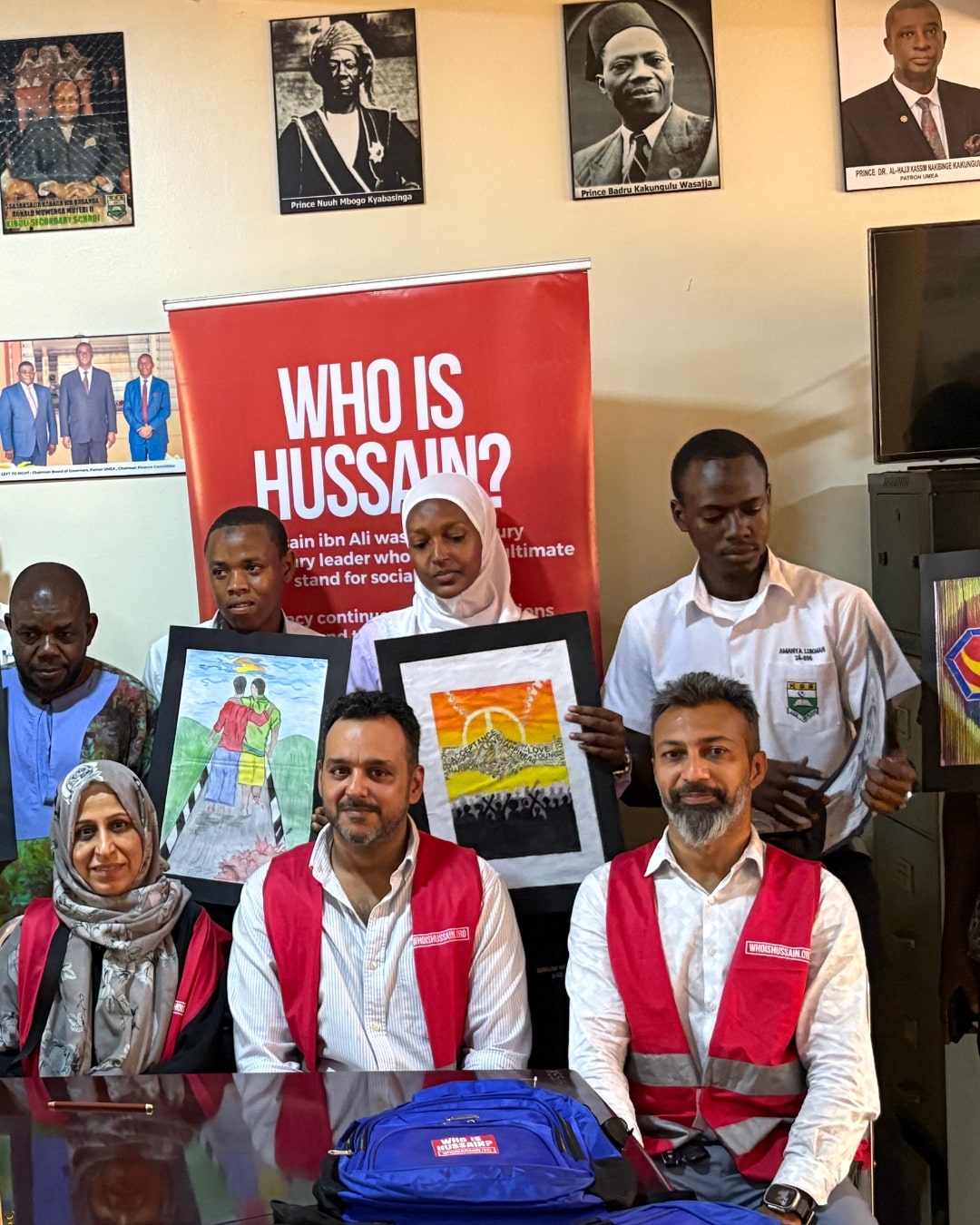
In Arusha, Ali and his team went above and beyond. They packed and distributed 80 sets of school uniforms, stationery packs and lunch boxes for children at a local school. On top of this, they donated textbooks to pupils and teachers alike, helping to create a more supportive and effective learning environment. They also raised enough funds to cover transport costs for a pupil who would otherwise struggle to get to school each day.
Meanwhile, in Faisalabad, Sara and her team made a big difference for children attending Aghosh and Umeed School. They distributed more than 120 stationery kits, giving each child the tools they need to take part in lessons and feel prepared in the classroom.
Each of these efforts reflects a shared belief in the power of education. These acts may seem small, but for the children who benefit, they open up real opportunities to learn, grow and stay in school.
Want to learn more? Check out the range of events held by our 60+ teams on Instagram.


